

New Hampshire 2027 PFAS Ban: What It Means for Your Shampoo and Conditioner
Published by Kathy Seim on Nov 24th 2026
New Hampshire’s PFAS ban takes effect January 1, 2027, prohibiting the sale of cosmetics, including shampoo and conditioner, with intentionally added PFAS (per- and polyfluoroalkyl substances). Here’s what PFAS are and why they’re a problem, what the law means for your hair care (spoiler: no changes if you use One Earth products!), how to check ingredient labels, and what to look for when choosing alternatives.
SHOP PFAS-FREE SHAMPOO + CONDITIONER BARS
What does New Hampshire’s PFAS ban say?
RSA 149-M:64 bans the sale of several categories of consumer products containing added PFAS, including cosmetics, food packaging, and carpets. Shampoo is covered because the FDA classifies it as a cosmetic, and New Hampshire follows that definition. The ban applies only to PFAS that manufacturers intentionally add - it doesn't cover trace amounts that enter a product accidentally. The ban takes effect January 1, 2027. Products manufactured before that date are exempt, meaning retailers can continue selling older inventory.
What are PFAS, and why are they called “forever chemicals”?
PFAS are often called “forever chemicals” because their strong chemical bonds make them difficult to break down in the environment (NIEHS). PFAS are sometimes added to personal care products and cosmetics as emulsifiers or binding agents, or to improve water resistance and product spreadability.
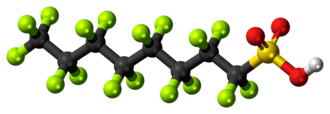
Molecular structure of perfluorooctanesulfonic acid (PFOS), one type of PFAS. Image by Jynto, via Wikimedia Commons, licensed under CC0 1.0.
Are PFAS harmful?
Some PFAS can be harmful. Scientists have studied two of them the most: PFOA (perfluorooctanoic acid) and PFOS (perfluorooctane sulfonate). A 2022 National Academies review found sufficient evidence linking PFAS exposure to reduced vaccine response, higher cholesterol, slightly lower birth weight, and kidney cancer in adults. The World Health Organization’s cancer research agency also says PFOA can cause cancer in humans and PFOS possibly can. The EPA set legal limits for both in drinking water in 2024.
Much of this research looks at people exposed to PFAS through contaminated drinking water or their jobs in manufacturing. We don’t know as much about the potential risks of PFAS in cosmetics specifically.
Some PFAS can also harm aquatic life. A 2024 EPA scientific assessment found evidence that PFOA can reduce survival, impair growth, and interfere with reproduction in aquatic organisms, including fish and invertebrates. The agency recommended freshwater limits for PFOA and PFOS to protect aquatic life. States and Tribes can use these recommendations when setting their own water quality standards.
Why did New Hampshire pass this law?
PFAS have already reached New Hampshire’s water. Officials first detected PFAS in groundwater and drinking water along the Seacoast in 2014, then found contamination in southern New Hampshire in 2016. By early 2024, the state’s environmental agency had sampled more than 14,000 private and public wells. In the Merrimack area, emissions from a plastics manufacturing plant contaminated the groundwater with PFAS. The plant's operator agreed to provide alternative water supplies to more than 1,100 properties.
This contamination came mainly from industry, not personal care products. Still, the state agency told lawmakers that everyday products can also contribute to PFAS pollution during use and after disposal. Rep. Karen Ebel, the bill’s sponsor, argued that New Hampshire should join other states in banning some of the products that have caused this harm.
Hair care products that contain PFAS contribute to the pollution when they wash down the drain. Conventional wastewater treatment plants typically can’t remove PFAS, so the chemicals go straight into the environment. Septic systems don’t reliably remove PFAS either, so the chemicals can pass into the groundwater. According to NEWMOA, PFAS from personal care products can eventually reach drinking water, adding to our exposure.
Do shampoo and conditioner contain PFAS?
Some shampoo and conditioner products contain PFAS (note: One Earth products do NOT contain PFAS!) In its first report on PFAS in cosmetics, the FDA found PFAS ingredients in about 0.4% of examined products. They were most commonly found in eye shadow, face and neck skin care, eyeliner, face powder, and foundation. Colorado’s health department adds that manufacturers sometimes put PFAS in hair products like conditioners and smoothers.
Labels don’t always tell the whole story, though. A 2021 study detected PFAS in a subset of cosmetics tested, even though most of those products did not list PFAS ingredients. However, the study focused largely on makeup, so it does not establish how common PFAS are in shampoo and conditioner.
Can PFAS get into products through plastic bottles?
Yes, but not all plastic bottles are affected. Some manufacturers treat high-density polyethylene (HDPE) containers with fluorine gas to keep liquids from seeping through the plastic. This process, called fluorination, can also create PFAS. These treated containers often hold products such as household cleaners, pesticides, and fuel.
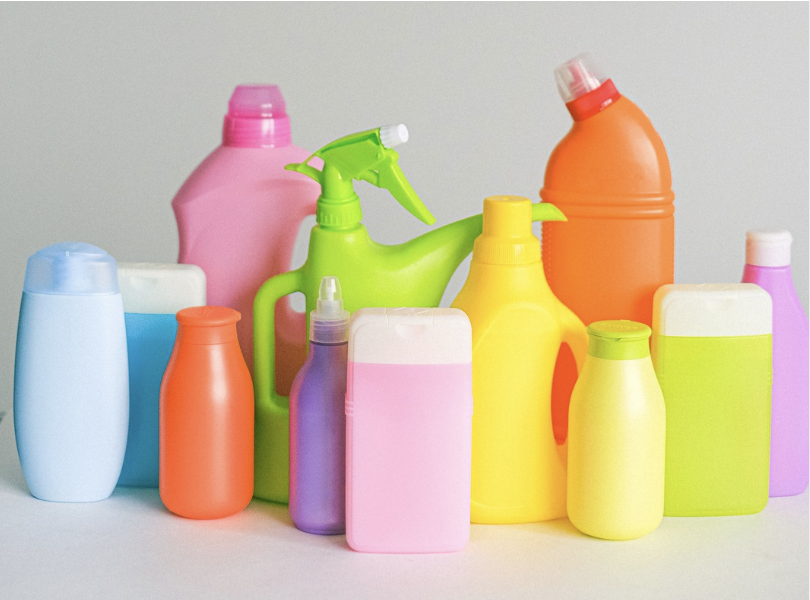
EPA testing found that PFAS can leach from certain fluorinated containers into the liquids inside, with amounts increasing over time. That means packaging can contaminate a product even when PFAS weren’t added as ingredients. The amount someone might be exposed to depends on the specific product and how it’s used.
Certain fluorinated plastic containers can pose risks to both people and the environment. For more on where plastic really goes when you toss it in the trash or recycling bin, check out our blog post The Myth of Away?
How to identify PFAS in shampoo and other hair products
You can't spot every PFAS on an ingredient label, but these three simple steps can help you make more informed choices about your purchases:
- Check ingredient labels: Look for ingredients like PTFE (polytetrafluoroethylene), perfluorononyl dimethicone, or other components containing terms like "perfluoro" or "trifluoro." Also, be cautious of cosmetic claims like “waterproof” or “long-lasting" - they don't always mean a cosmetic contains PFAS, but there is a higher chance it does.
- Ask the manufacturer: Ask the brand whether it holds supplier statements or testing documentation showing no intentionally added PFAS. A company that provides a clear response shows how seriously it takes ingredient transparency and consumer safety.
- Use fewer styling products: Fewer products means fewer chances to bring one home that contains PFAS.
Shampoo and conditioner made without PFAS
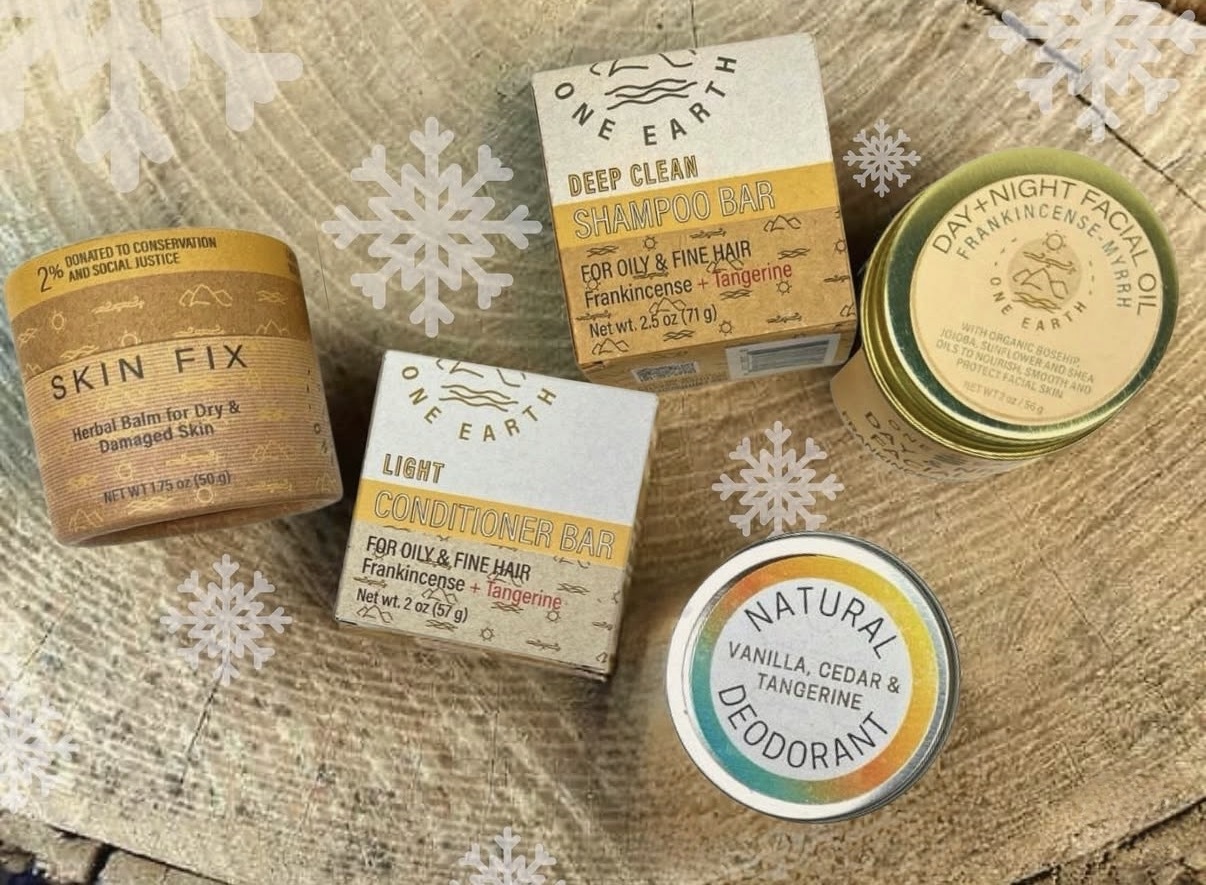
Shampoo and conditioner rinse down the drain, so what goes into them matters directly for both your health and the well-being of ecosystems. That’s why One Earth Body Care doesn't add PFAS or other harmful chemicals to our shampoo bars, conditioner bars, or any of our products. And because our bars skip plastic packaging altogether, you don't have to worry about fluorinated plastic bottles leaching chemicals into your product.
Shampoo and conditioner bars offer other benefits, too. Bars are concentrated, so you aren’t paying to ship water in plastic bottles. They're convenient for travel, take up less space in the shower, and each bar replaces approximately two plastic bottles. Over the course of a year, that adds up to a lot less plastic waste and contamination!
Our conditioner bars work as either a rinse-out or a leave-in. One bar can replace your traditional leave-in conditioner.
Want to learn more about what goes into our formulas? Read The Science Behind Our Shampoo Bars and How Hair Conditioners Work.
READY TO MAKE THE SWITCH?
Try One Earth’s shampoo and conditioner bars for an alternative to traditional bottled hair care. They’re made without PFAS and they’re packaged in cardboard boxes rather than plastic bottles.
SHOP SHAMPOO + CONDITIONER BUNDLES
About the author: Kathy Seim is the founder of Simply Put Co., an SEO copywriting and marketing strategy business in Keene, NH. She works with health, wellness, and service-based small businesses that want to do good work and still have a life outside of it.
Sources:
- New Hampshire General Court. RSA 149-M:64.
- NH Department of Environmental Services, 2024. Letter of Testimony for HB 1649.
- NH Department of Environmental Services. Saint-Gobain Performance Plastics.
- New Hampshire Bulletin, 2024. After progress on PFAS bills this session, Merrimack reps promise, “We’ll be back”.
- NEWMOA. PFAS in Personal Care Products.
- National Academies of Sciences, Engineering, and Medicine, 2022. Guidance on PFAS Exposure, Testing, and Clinical Follow-Up.
- CDC/ATSDR. Health effects of PFAS.
- IARC, 2023. IARC Monographs evaluate the carcinogenicity of PFOA and PFOS.
- US EPA. EPA Announces It Will Keep Maximum Contaminant Levels for PFOA, PFOS.
- US FDA, 2025. Report on the Use of PFAS in Cosmetic Products and Associated Risks.
- US FDA. Is It a Cosmetic, a Drug, or Both? (Or Is It Soap?).
- Whitehead, H.D., et al., 2021. Fluorinated Compounds in North American Cosmetics. Environ. Sci. Technol. Lett. 8(7): 538-544.
- Colorado Department of Public Health and Environment. Guidance for PFAS in consumer products.
- US EPA, 2023. EPA Takes Action to Protect People from PFAS that Leach from Plastic Containers.
- Erickson, B.E., 2023. US EPA orders packaging firm Inhance to stop making PFAS. C&EN.
- NIEHS. PFAS.